Optimize Your Designs with DFAM Manufacturing Consultation
- goredtailinnovatio
- Mar 16
- 4 min read

When it comes to product development and manufacturing, the design phase is where success or failure often begins. Optimizing your designs for additive manufacturing (AM) is not just a technical step - it’s a strategic move that can save time, reduce costs, and improve product performance. This is where Design for Additive Manufacturing (DfAM) expertise becomes invaluable. I’ve worked alongside engineers and founders who’ve seen firsthand how integrating DfAM principles early in the process transforms their projects from prototypes to scalable products.
In this post, I’ll share practical insights on how to optimize your designs with DFAM manufacturing consultation, focusing on real-world applications and collaborative approaches that lead to better outcomes.
Why DFAM Manufacturing Consultation Matters
Designing for additive manufacturing is not the same as designing for traditional manufacturing methods. AM offers unique capabilities like complex geometries, internal channels, and lightweight structures, but it also comes with constraints such as build orientation, support structures, and material properties.
A DFAM manufacturing consultation helps you navigate these complexities. It’s a partnership where your design intent meets manufacturing realities. Together, we identify potential pitfalls early, explore design alternatives, and align your product goals with the capabilities of the chosen AM technology.
For example, a startup I recently worked with had a complex part that was initially designed for CNC machining. After a DFAM consultation, we reimagined the part to leverage lattice structures and reduce weight by 30% without compromising strength. This not only cut material costs but also improved the part’s performance in its application.
Key benefits of DFAM manufacturing consultation include:
Early identification of design challenges related to AM processes
Optimization of part geometry for build efficiency and strength
Reduction of post-processing time and costs
Enhanced product functionality through innovative design features
Alignment of design with scalable production methods

How DFAM Manufacturing Consultation Supports Scalable Production
Scaling from prototype to production is a critical phase where many designs hit roadblocks. What works for a one-off print may not be feasible or cost-effective at volume. DFAM manufacturing consultation bridges this gap by focusing on producibility and repeatability.
During consultation, we analyze factors such as:
Build orientation and nesting strategies to maximize printer utilization
Material selection based on mechanical requirements and cost
Design modifications to minimize support structures and reduce print time
Post-processing workflows that can be standardized for batch production
For instance, a hardware founder I collaborated with needed to produce hundreds of parts monthly. By applying DFAM principles, we redesigned the parts to be printed in batches with minimal supports, cutting print time by 25% and simplifying finishing steps. This made the transition to small-scale production smoother and more predictable.
The goal is to create designs that are not only optimized for additive manufacturing but also ready for integration into broader Industry 4.0 digital manufacturing systems. This ensures your product development pipeline is agile and scalable.
What does DfAM mean?
DfAM stands for Design for Additive Manufacturing. It’s a design approach tailored specifically to the capabilities and limitations of additive manufacturing technologies. Unlike traditional design for manufacturing (DFM), which focuses on subtractive or formative processes, DfAM leverages the unique freedom of AM to create parts that are lighter, stronger, and more complex.
Key principles of DfAM include:
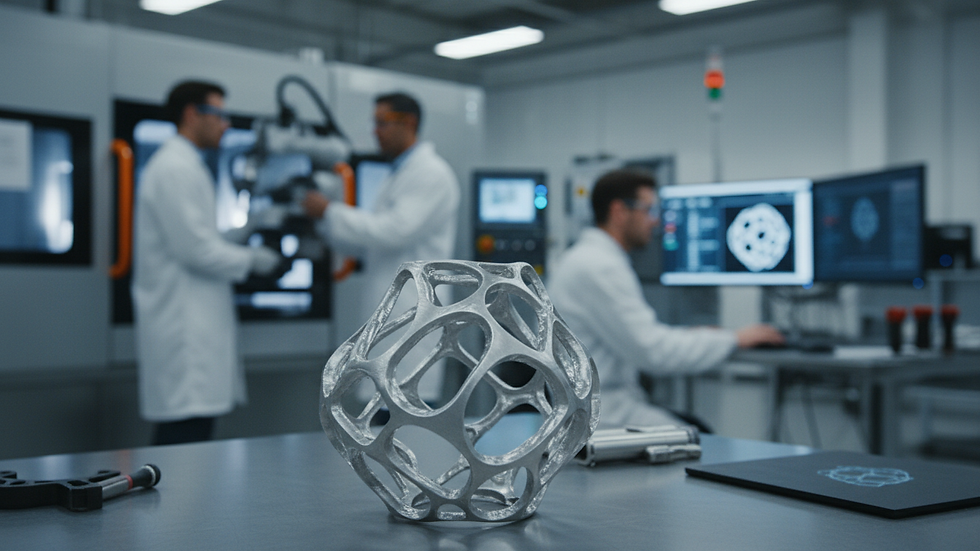
Geometry optimization: Using complex shapes like lattices and organic forms that are impossible or costly to produce with traditional methods.
Material efficiency: Reducing waste by building only what’s necessary, often with internal voids or optimized infill.
Support minimization: Designing parts to reduce or eliminate the need for support structures, which saves material and post-processing time.
Functional integration: Combining multiple parts or functions into a single printed component to reduce assembly steps.
Understanding these principles helps you design parts that fully exploit additive manufacturing’s potential while avoiding common pitfalls like excessive supports or weak points.

Practical Steps to Optimize Your Designs with DFAM Expertise
Optimizing your designs for additive manufacturing is a process that benefits from collaboration and iteration. Here’s a practical approach I recommend:
Engage early with DFAM experts: Don’t wait until your design is finalized. Early consultation helps identify opportunities and constraints before costly revisions.
Define clear product requirements: Understand the functional, mechanical, and aesthetic goals of your part. This guides design decisions and material choices.
Leverage simulation and analysis tools: Use software to simulate build orientation, thermal stresses, and mechanical performance. This reduces trial and error.
Iterate with rapid prototyping: Use quick prints to validate design changes and gather feedback. This hands-on approach accelerates learning.
Plan for post-processing: Consider how your design will be finished, assembled, or treated after printing. Design features that simplify these steps.
Document design for production: Create detailed specifications and build instructions that support consistent manufacturing at scale.
By following these steps, you create a design workflow that integrates DFAM principles seamlessly into your product development cycle.
Partnering for Success: The Value of Collaboration
Design optimization is not a solo effort. It requires a partnership between designers, engineers, and manufacturing experts. When we work together, sharing knowledge and ownership of the process, the results are stronger and more reliable.
I encourage teams to approach DFAM manufacturing consultation as a collaborative dialogue. Share your challenges openly, ask questions, and be willing to explore alternative solutions. This mindset leads to designs that are not only manufacturable but also innovative and competitive.
If you’re ready to take your designs to the next level, consider reaching out for a dfam expert consultation. This step can unlock new possibilities and ensure your product development is aligned with advanced manufacturing capabilities.
Moving Forward with Confidence in Your Designs
Optimizing your designs with DFAM expertise is a strategic investment in your product’s future. It reduces risk, improves performance, and sets the stage for scalable production. By embracing the principles of design for additive manufacturing and partnering with experienced professionals, you gain a competitive edge in today’s fast-evolving manufacturing landscape.
Whether you’re refining a prototype or preparing for volume production, DFAM manufacturing consultation provides the clarity and direction needed to make informed design decisions. The process is grounded in real-world experience, technical precision, and a shared commitment to quality.
Take the next step with confidence. Your designs deserve the advantage that comes from true DFAM expertise.