
Optimize Manufacturing with DFAM Manufacturing Expertise
- goredtailinnovatio
- May 11
- 4 min read

In the world of product development and manufacturing, efficiency and precision are not just goals - they are necessities. Over the years, I have seen firsthand how integrating Design for Additive Manufacturing (DfAM) principles can transform the way products are designed and produced. When you combine this with expert guidance, the results are tangible improvements in cost, speed, and quality. This post dives into how leveraging dfam manufacturing expertise can optimize your manufacturing process, reduce waste, and accelerate time to market.
Why dfam manufacturing expertise Matters
Manufacturing is evolving rapidly. Traditional design methods often fall short when applied to advanced manufacturing technologies like 3D printing and other additive processes. This is where dfam manufacturing expertise becomes critical. It’s not just about knowing how to print a part; it’s about understanding the interplay between design, material properties, and manufacturing constraints.
When you work with experts who understand these nuances, you gain:
Improved part performance: Designs optimized for additive manufacturing often result in lighter, stronger, and more functional parts.
Reduced production costs: By minimizing material waste and avoiding costly post-processing, you save money.
Faster iteration cycles: Rapid prototyping and design adjustments become smoother and more predictable.
Scalable production: Expertise ensures that designs are not only manufacturable but also scalable for larger production runs.
This expertise is not theoretical. It’s grounded in real-world experience, where every design decision is tested against manufacturing realities.
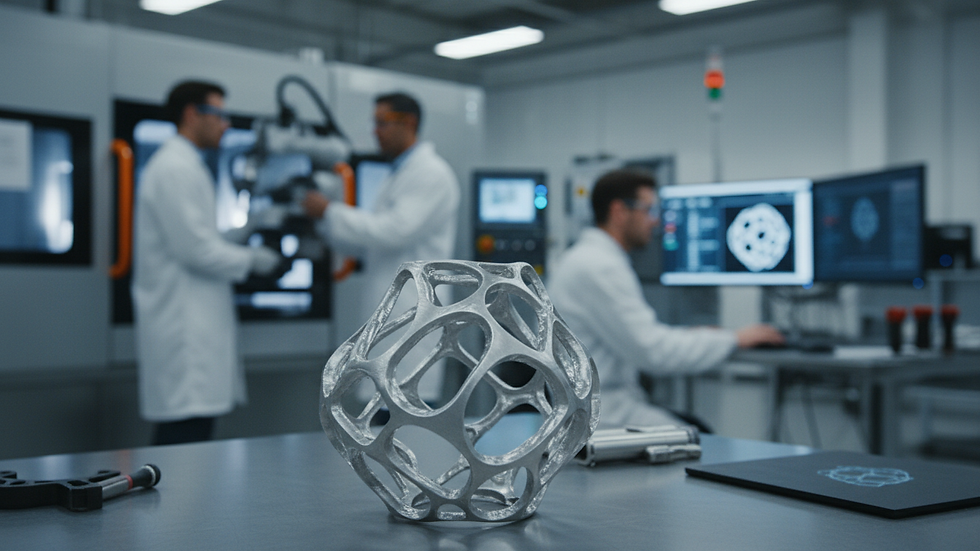
What does DfAM mean?
DfAM stands for Design for Additive Manufacturing. It’s a specialized approach to product design that takes full advantage of additive manufacturing technologies. Unlike traditional subtractive methods, additive manufacturing builds parts layer by layer, which opens up new possibilities for complex geometries and internal structures.
DfAM is about:
Designing with the process in mind: Understanding the capabilities and limitations of the specific additive technology being used.
Optimizing material use: Creating lightweight structures without compromising strength.
Reducing assembly: Designing parts that consolidate multiple components into one.
Enhancing functionality: Incorporating features that are impossible or impractical with traditional manufacturing.
By applying DfAM principles, you can unlock innovations that improve product performance and reduce manufacturing complexity.
How Expert Consultation Enhances Your Manufacturing Process
Working with a dfam expert consultation partner is a collaborative process. It’s not about handing over a design and hoping for the best. It’s about shared ownership of the product’s success from concept through production.
Here’s how expert consultation makes a difference:
Early-stage design review: Experts analyze your initial designs to identify potential manufacturing challenges and suggest improvements.
Material selection guidance: Choosing the right material for your application and manufacturing method is critical. Experts help balance cost, performance, and manufacturability.
Process optimization: Tailoring the design to the specific additive manufacturing process ensures better quality and repeatability.
Prototyping and testing support: Rapid prototyping allows you to validate designs quickly and make informed decisions.
Scalability planning: Experts help you plan for scaling production without sacrificing quality or increasing costs disproportionately.
This partnership approach reduces risk and accelerates development timelines. It’s about building a manufacturing process that works for your product, not forcing your product to fit a generic process.

Practical Steps to Integrate DFAM Expertise into Your Workflow
Integrating dfam manufacturing expertise into your workflow doesn’t have to be complicated. Here are practical steps to get started:
Engage early: Bring in DFAM experts during the concept phase, not after the design is finalized.
Collaborate closely: Maintain open communication between your design, engineering, and manufacturing teams.
Use iterative design: Leverage rapid prototyping to test and refine designs quickly.
Document learnings: Keep track of what works and what doesn’t to build a knowledge base for future projects.
Invest in training: Equip your team with a solid understanding of additive manufacturing principles and DFAM best practices.
By embedding these steps into your process, you create a culture of continuous improvement and innovation.
The Impact of DFAM on Industry 4.0 and Digital Manufacturing
Industry 4.0 is reshaping manufacturing with digital integration, automation, and data-driven decision-making. DFAM fits naturally into this landscape by enabling designs that are optimized for digital manufacturing systems.
When combined with Industry 4.0 technologies, DFAM expertise helps:
Streamline production workflows: Digital twins and simulation tools allow for virtual testing of designs before physical production.
Enhance quality control: Real-time monitoring and feedback loops improve consistency.
Enable customization at scale: Additive manufacturing supports batch size one production without sacrificing efficiency.
Reduce lead times: Digital integration accelerates the transition from design to production.
This synergy between DFAM and Industry 4.0 creates a manufacturing environment that is agile, efficient, and responsive to market demands.
Building a Partnership for Long-Term Success
Optimizing manufacturing with DFAM is not a one-off project. It’s a continuous journey that benefits from a trusted partner who understands your goals and challenges. When you collaborate with experts who share ownership of the outcome, you gain more than just technical advice - you gain a strategic ally.
This partnership approach means:
Shared problem-solving: Tackling challenges together with transparency and mutual respect.
Tailored solutions: Customizing processes and designs to fit your unique needs.
Ongoing support: Access to expertise as your product evolves and scales.
Focus on outcomes: Prioritizing real-world results over theoretical possibilities.
By investing in this kind of relationship, you position your manufacturing process for sustained success and innovation.
Optimizing manufacturing through DFAM manufacturing expertise is a practical, proven way to improve product development and production. It requires collaboration, technical know-how, and a commitment to continuous improvement. When you bring in expert consultation at the right time and work as partners, the benefits are clear: better products, faster time to market, and scalable manufacturing that meets the demands of today’s competitive landscape.


