
Exploring the Additive Manufacturing Advantages: What You Need to Know
- goredtailinnovatio
- Jan 12
- 5 min read

When you’re building a hardware startup or inventing a new product, manufacturing can feel like a mountain you’re not sure you can climb. Traditional manufacturing often demands hefty upfront costs, long lead times, and rigid processes that don’t flex well with your need to iterate fast. That’s where additive manufacturing steps in as a game-changer. It’s not just a buzzword; it’s a practical tool that can help you move from prototype to production with less risk and more control.
Let’s break down the additive manufacturing advantages and how they can help you overcome common manufacturing hurdles. We’ll keep it straightforward, honest, and actionable—no fluff, just what you need to know to make smart decisions.
Why Additive Manufacturing Advantages Matter for Your Startup
Additive manufacturing, often called 3D printing, builds parts layer by layer directly from digital files. This approach flips traditional subtractive methods on their head, where you start with a block of material and cut away what you don’t need. Here’s why that matters for you:
Lower upfront costs: No need for expensive tooling or molds that can cost tens of thousands of dollars. You can print your parts directly, which means you can start small and scale as you go.
Faster iteration cycles: When you want to tweak your design, you just update the digital file and print again. This speed lets you test and refine your product without waiting weeks or months.
Complex geometries made easy: Additive manufacturing can create shapes and internal structures that are impossible or prohibitively expensive with traditional methods.
On-demand production: You can produce parts as needed, reducing inventory costs and waste.
Customization: Perfect for personalized products or small batches where each item might be slightly different.
These advantages are especially valuable when you’re navigating the early stages of product development and need to validate your ideas quickly and affordably.

How Additive Manufacturing Advantages Translate to Real-World Benefits
Let’s get practical. What do these advantages mean for your day-to-day operations and your bottom line?
1. Speed to Market
Imagine you’ve just finished your initial design for a new IoT device. Instead of waiting weeks for a traditional manufacturer to create tooling and produce your first batch, you can print your prototype in days. This speed lets you:
Test your product with real users sooner
Gather feedback and make improvements quickly
Impress investors with working prototypes rather than just drawings
2. Cost Efficiency for Small Runs
If you’re producing fewer than a few hundred units, additive manufacturing can be more cost-effective than injection molding or CNC machining. You avoid the high fixed costs of tooling and can produce exactly what you need, when you need it.
3. Design Freedom
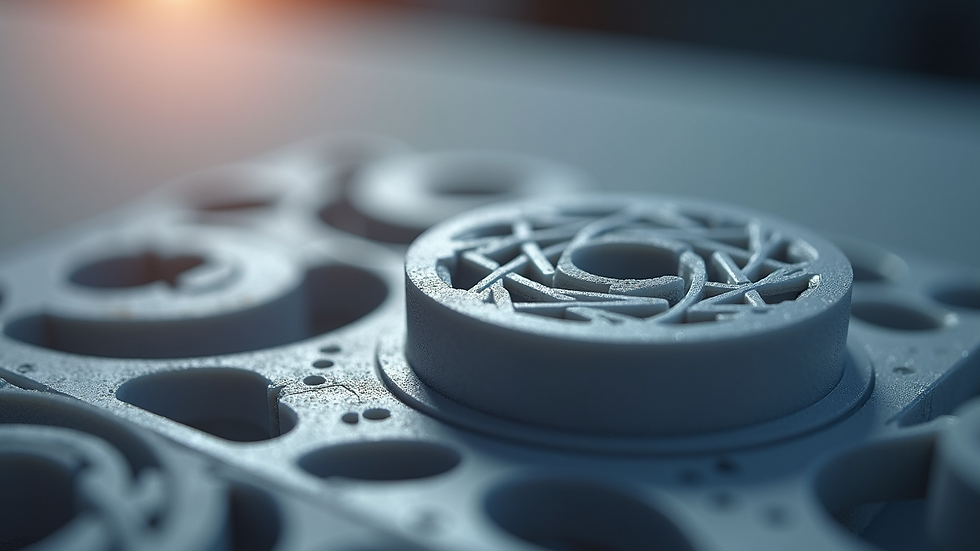
Additive manufacturing lets you experiment with lightweight lattice structures, internal channels for cooling or wiring, and other design features that would be impossible or too expensive otherwise. This freedom can lead to better-performing products and innovative solutions.
4. Local Production and Quality Control
By working with local additive manufacturing partners, you maintain closer control over quality and timelines. This proximity supports faster communication and collaboration, which is crucial when you’re iterating rapidly.
5. Sustainability
Additive manufacturing typically generates less waste than subtractive methods. Using only the material needed for the part reduces scrap and lowers your environmental footprint—a growing concern for customers and investors alike.
For a deeper dive into the additive manufacturing benefits, check out this resource that breaks down the technical and business advantages in detail.
What are the advantages and disadvantages of manufacturing?
No manufacturing method is perfect, and additive manufacturing is no exception. Understanding both sides helps you make informed choices.
Advantages
Flexibility: Easily switch between different parts without retooling.
Customization: Tailor products to individual needs or small batches.
Reduced lead times: Faster prototyping and production cycles.
Lower initial investment: No expensive molds or dies.
Complex designs: Create intricate geometries and internal features.
Disadvantages
Material limitations: Not all materials are available or suitable for additive processes.
Surface finish and strength: Some 3D printed parts may require post-processing to meet strength or aesthetic requirements.
Production speed for large volumes: Printing thousands of parts can be slower and more expensive than traditional mass production.
Size constraints: Build volume is limited by the printer’s capacity.
Cost per part: For very high volumes, traditional manufacturing often becomes more cost-effective.
Knowing these trade-offs helps you decide when additive manufacturing is the right tool and when it’s better to switch to other methods.
How to Get Started with Additive Manufacturing for Your Product
If you’re ready to explore additive manufacturing, here’s a practical roadmap to get you moving:
Define your goals: Are you looking for rapid prototyping, small-batch production, or custom parts? Your goals will guide your process.
Choose the right technology: There are several types of additive manufacturing—FDM, SLA, SLS, DMLS, and more. Each has strengths and limitations depending on material, precision, and part size.
Work with experienced partners: Find local shops or microfactories that understand your needs and can guide you through design for additive manufacturing (DfAM).
Design for additive manufacturing: Optimize your CAD files to take advantage of additive capabilities—think lightweight structures, integrated features, and minimal support material.
Prototype and test: Use printed parts to validate form, fit, and function before committing to larger production runs.
Plan for scale: As your volumes grow, evaluate when to transition to hybrid or traditional manufacturing methods to optimize cost and speed.
By following these steps, you’ll reduce risk and accelerate your path from idea to market-ready product.
Why Local Craftsmanship and Additive Manufacturing Go Hand in Hand
In Oklahoma and across the US, there’s a growing movement to bring manufacturing back home. Additive manufacturing fits perfectly with this trend because it supports small-scale, digitally equipped workshops that can compete with overseas factories on quality and speed.
When you partner with local artisans and engineers who understand your vision, you get more than just parts—you get a collaborative relationship. This personal touch means:
Faster problem-solving when issues arise
Transparent communication about timelines and costs
A shared commitment to quality and innovation
Supporting local microfactories also helps build a resilient supply chain that’s less vulnerable to global disruptions. For startups and inventors, this means more reliability and peace of mind.
Taking the Next Step: Making Additive Manufacturing Work for You
Additive manufacturing is not a silver bullet, but it’s a powerful tool in your arsenal. By understanding its advantages and limitations, you can leverage it to:
Cut costs and reduce risk in early product development
Iterate quickly and improve your design based on real-world feedback
Produce complex, customized parts that stand out in the market
Build strong local partnerships that support your growth
If you’re ready to explore how additive manufacturing can fit into your product journey, start by reaching out to trusted local experts who can guide you through the process. Together, you can turn your ideas into reality with craftsmanship and precision.
Remember, manufacturing is a journey, not a hurdle. With the right approach and tools, you can build the products you envision—on your terms, at your pace, and with the quality your customers expect.


